Chlorophytum
Chlorophytum is a genus of adaptable plants best known for Chlorophytum comosum, the classic Spider Plant. They are popular houseplants because they tolerate a relatively wide range of indoor conditions, grow quickly when conditions are favorable, and readily produce plantlets on long flowering stems. Their thickened, tuberous roots store water, allowing them to tolerate periods of dryness but also making them susceptible to problems when soil remains consistently saturated.
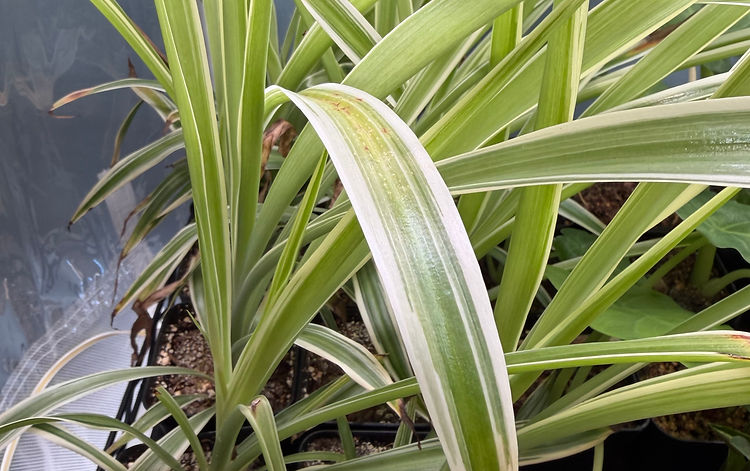
Common species & Cultivars
Most houseplant Chlorophytum are cultivars of Chlorophytum comosum, including:
C. comosum ‘Vittatum’ — green leaves with a broad white stripe
C. comosum ‘Variegatum’ — white margins with a green center
C. comosum ‘Bonnie’ — curly, variegated foliage
C. comosum ‘Hawaiian’ — green-and-cream variegated foliage that can develop stronger coloration with age
C. comosum ‘Ocean’ — compact cultivar with white margins
Care applies broadly to common cultivated Chlorophytum, though individual cultivars can vary somewhat in their light tolerance and growth rate.
Care at a glance
LIGHT
Bright indirect to moderate light
WATER
Allow the upper 1–2" of soil to dry before watering
SOIL
Well-draining, airy indoor mix
TEMP
60–85°F
GROWTH
Upright, arching, clumping, and plantlet-producing
DIFFICULTY
Easy
Light
Chlorophytum is adaptable to a wide range of indoor light conditions, but brighter light generally produces stronger growth, denser foliage, and better-maintained variegation.
Light should be understood as food. Plants use light to power photosynthesis, which provides the energy needed to produce new leaves, roots, and plantlets. A spider plant can survive in relatively low light, but survival is not the same as vigorous growth. When light is insufficient, growth slows and the plant may produce fewer plantlets while using water more slowly.
For Chlorophytum, the goal is enough light to support active growth without exposing the foliage to intense, unacclimated sunlight.
Target Light Levels (Foot-Candles)
Ideal: 150–300 fc
Acceptable: 75–150 fc
Upper range: 300–500 fc with acclimation and appropriate watering
Variegated cultivars generally benefit from the brighter end of the range to maintain strong contrast and vigorous growth.
Chlorophytum can tolerate some gentle direct sunlight, particularly in the morning or during winter. However, plants moved suddenly into strong direct sun can develop bleached or brown patches from sun stress.
If using grow lights, provide roughly 10–14 hours of light per day, adjusting intensity and duration based on the plant's response.
Signs of insufficient light:
Slow or weak growth
Longer, more widely spaced leaves
Reduced production of plantlets
Loss of variegation or less pronounced contrast
Soil remaining wet for extended periods
A light meter can help determine whether a location actually provides enough light rather than relying on how bright it looks to your eyes.
Water
Spider plants prefer to dry somewhat between waterings rather than remaining constantly wet. Their thickened roots allow them to store water, so they generally handle a missed watering better than prolonged saturation.
Water when the top 1–2" of soil has dried, then water thoroughly until excess drains from the bottom of the pot.
Do not water based solely on a calendar. How quickly a Chlorophytum dries depends on light, temperature, humidity, airflow, pot size, and soil composition.
A simple moisture check:
Push your finger 1–2" into the soil.
If that portion is still noticeably moist, wait.
If it has dried, water thoroughly.
Allow excess water to drain completely.
A moisture meter can be useful for larger pots, but it should be used alongside a physical check of the soil rather than treated as an absolute indicator.
Common Watering Problems
Yellowing leaves: Often associated with prolonged wet soil, although older leaves naturally yellow and die as part of normal growth.
Brown leaf tips: Can result from inconsistent watering, dry conditions, salt accumulation, or environmental stress. Brown tips do not automatically mean the plant needs more water.
Soft or mushy roots: Usually indicate prolonged excess moisture and insufficient oxygen around the roots.
Wrinkled or limp leaves: Can indicate significant dryness, particularly if the soil has become extremely dry and the roots are no longer able to access enough moisture.
Because Chlorophytum stores water in its roots, it is generally safer to allow the plant to become moderately dry than to keep the soil continuously saturated.
Soil
Chlorophytum does best in a soil mix that holds enough moisture for the roots to access water while maintaining plenty of air-filled pore space.
A good indoor mix should be:
Well-draining
Airy rather than dense
Moisture-retentive without staying saturated
Structurally stable over time
A practical mix can be based around:
2 parts coco coir or quality potting mix
1 part perlite or pumice
1 part fine-to-medium orchid bark
The exact ratio can be adjusted based on the growing environment. Plants kept in lower light or cooler conditions may benefit from a more aerated, faster-drying mix.
Because spider plants develop substantial water-storing roots, avoid unnecessarily large containers. An oversized pot can leave a large volume of soil wet around a relatively small root system.
When repotting, move up only about 1–2 inches in pot diameter at a time.
Always use a container with drainage holes.
Growth & Habit
Clumping: New growth develops from the plant's central crown, gradually forming a larger clump.
Arching foliage: Long, narrow leaves emerge from the center and naturally arch outward.
Runners: Mature plants produce long stems that extend outward from the crown.
Plantlets: Small plants develop along runners and can eventually be rooted independently.
Flowering: Small white flowers may appear along the runners of mature plants.
Root storage: Thickened roots store water, helping the plant tolerate periods of dryness.
Brighter light and active growth generally encourage more vigorous runner and plantlet production.
common issues
Brown tips: Very common in spider plants. Often associated with inconsistent moisture, mineral accumulation, dry conditions, or environmental stress.
Yellow leaves: Occasional older leaves naturally yellow and die. Widespread yellowing, especially when soil remains wet, can indicate excessive moisture or poor root aeration.
Few or no plantlets: Often associated with insufficient light, immature plants, or slow growth. Increasing light is generally more useful than increasing fertilizer.
Loss of variegation: Insufficient light can cause variegated cultivars to produce less pronounced coloration. Move gradually toward brighter indirect light.
Root rot: Consistently wet, poorly aerated soil reduces oxygen availability around the roots and can eventually cause root deterioration. This is particularly common when plants are kept in low light.
Leaf scorch: Sudden exposure to strong direct sunlight can cause bleached or brown patches. Acclimate plants gradually when increasing light intensity.
Long-Term Care Notes
Chlorophytum is one of the more forgiving houseplant genera, but good growth still depends on balancing light, water, and soil structure.
Provide enough light for active growth, allow the upper portion of the soil to dry between waterings, and maintain an airy root environment. Prune dead or heavily damaged leaves at the base of the plant to maintain a healthy appearance.
Large clumps can be divided during active growth, while plantlets can be rooted independently to produce new plants.
Consistency is more important than perfection. Spider plants are adaptable, but they perform best when their growing conditions remain relatively stable.